

Visualize and analyze complex relational data.
Tulip is an information visualization framework dedicated to the analysis and visualization of relational data. It provides powerful graph visualization techniques, interactive exploration tools and a scalable architecture for research and large graph analysis. Tulip is now primarily distributed through its source code repository. Historical binary releases remain available for previous versions.
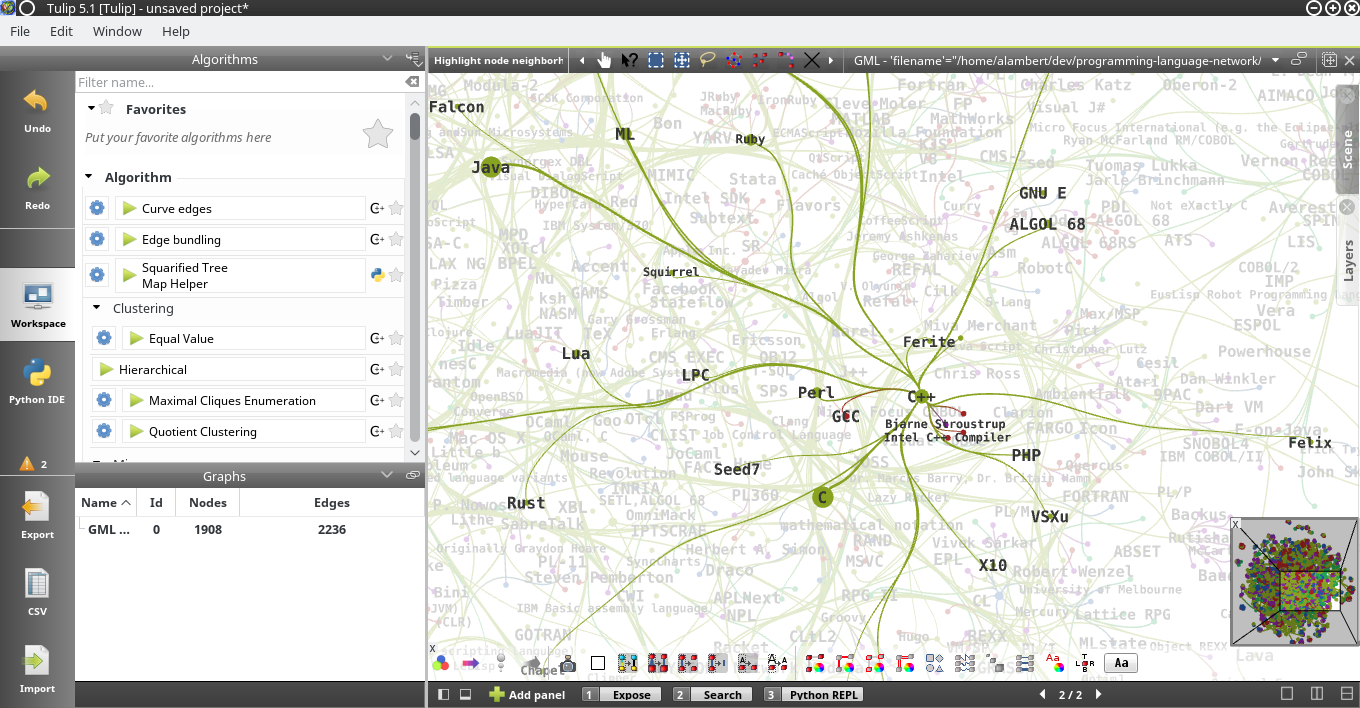
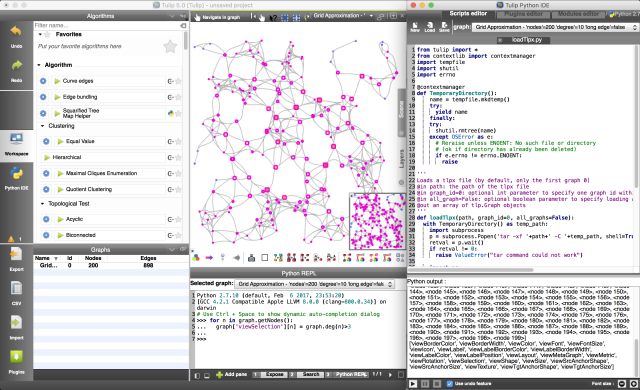
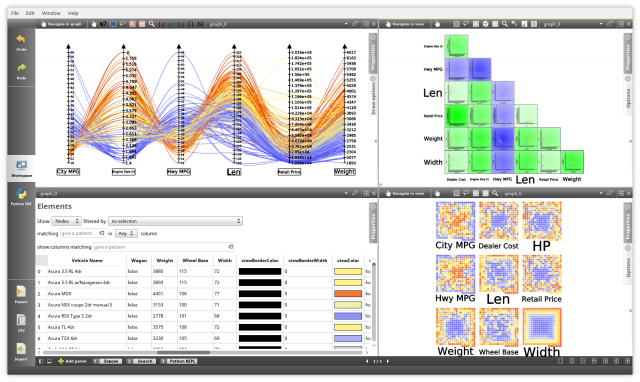
About Tulip
Developed at LaBRI, Tulip combines graph drawing algorithms, visual analytics, interaction techniques and extensibility mechanisms into a single framework. It is widely used in research and education for the exploration of large relational datasets. Tulip is now primarily distributed through its source code repository. Historical binary releases remain available for previous versions.
Graph Visualization
Advanced graph drawing algorithms and interactive rendering for large-scale graph exploration.
Extensible Framework
Plugin architecture enabling researchers and developers to extend Tulip with custom algorithms and visualizations.
Research Platform
Used for experimentation, teaching and scientific visualization in multiple research domains.
Main Features
Interactive Exploration
Navigate and manipulate graphs interactively through filtering, selection and dynamic layouts.
Large Graph Support
Designed to handle large relational datasets efficiently with optimized visualization techniques.
Python Integration
Automate workflows and analyses through Python scripting and algorithm integration.
Cross-platform
Available on Linux, macOS and Windows through source compilation and historical binary releases.
Downloads
Tulip is now primarily distributed through its source code repository. Historical binary releases remain available for previous versions.
Source Code
Access the latest Tulip development version and build the framework from source.
Historical Binary Releases
Older precompiled binaries remain available on SourceForge (up to version 6.0.1). These are the last officially distributed binary versions.
Historical pre-compiled Python wheel packages
From Python 3.9 to 3.13, we offer precompiled multi-platform Python wheels available on Pypi. They are based on Tulip 6.0.0. These are the last officially distributed binary versions.
Documentation
User Documentation
Learn how to use Tulip for graph exploration, visualization and data analysis.
Documentation LinkDeveloper Documentation
API references, plugin development and integration guides for extending Tulip.
Developer GuidePython Documentation
Use Tulip through Python scripting for automated workflows and advanced analyses.
Python APIResearch & Community
Tulip is developed and maintained by researchers and engineers from LaBRI and its scientific ecosystem. The framework has been used in numerous academic and industrial research projects involving graph visualization and visual analytics.
LaBRI
Bordeaux Laboratory for Research in Computer Science.
Université de Bordeaux
Academic environment supporting research and innovation in information visualization.
Open Source
Community-driven development through collaborative research and open contributions.