 |
Tulip
5.3.1
Large graphs analysis and drawing
|
|
Tulip
5.3.1
Large graphs analysis and drawing
|
#include <Iterator.h>
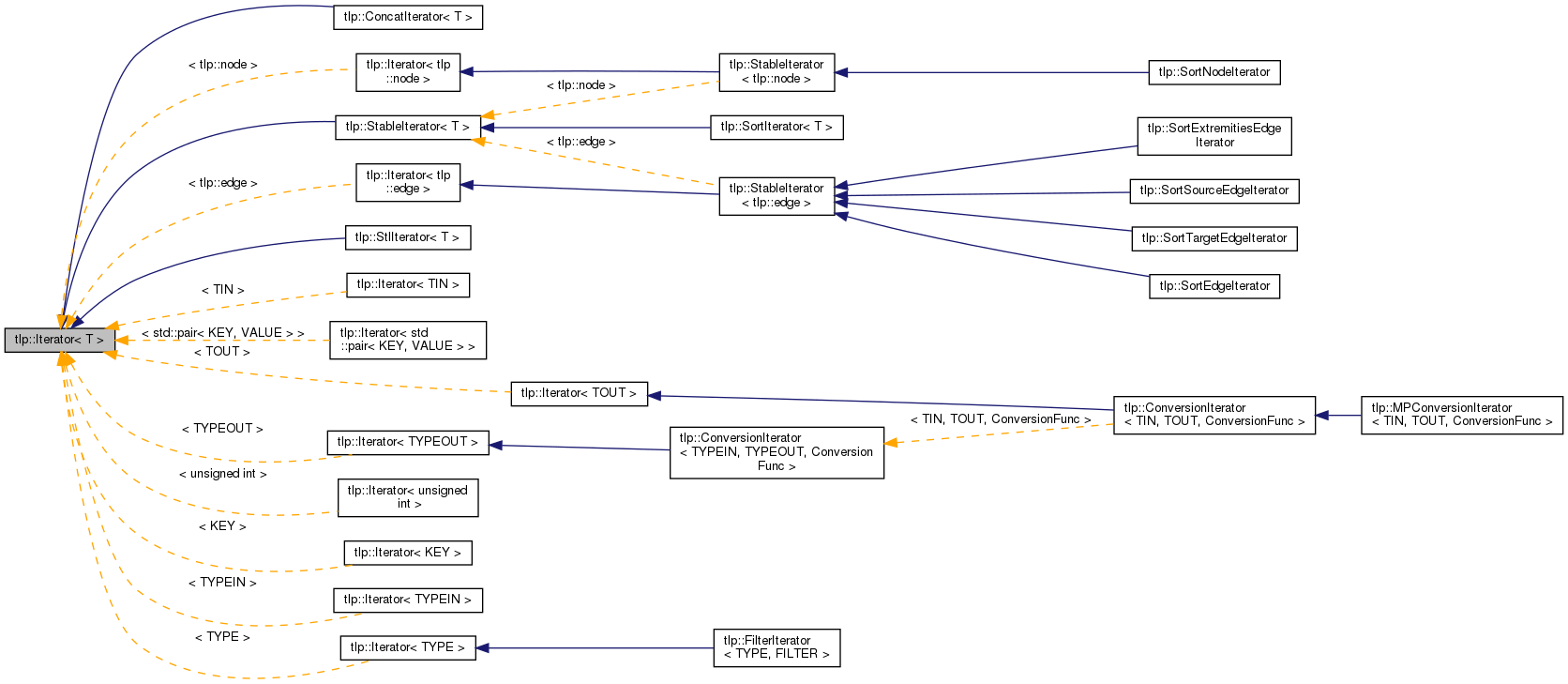
 Inheritance diagram for tlp::Iterator< T >:
Public Member Functions | |
| iterator_t | begin () |
| iterator_t | end () |
| virtual bool | hasNext ()=0 |
| virtual T | next ()=0 |
Interface for Tulip iterators. Allows basic iteration operations only.
Below are some examples about how to use Tulip iterators in C++ code.
|
pure virtual |
Tells if the sequence is at its end.
Implemented in tlp::StableIterator< T >, tlp::StableIterator< tlp::node >, tlp::StableIterator< tlp::edge >, tlp::ConcatIterator< T >, tlp::FilterIterator< TYPE, FILTER >, tlp::ConversionIterator< TYPEIN, TYPEOUT, ConversionFunc >, tlp::ConversionIterator< TIN, TOUT, ConversionFunc >, and tlp::StlIterator< T, ITERATOR >.
Here is the caller graph for this function:
|
pure virtual |
Moves the Iterator on the next element.
Implemented in tlp::StableIterator< T >, tlp::StableIterator< tlp::node >, tlp::StableIterator< tlp::edge >, tlp::ConversionIterator< TYPEIN, TYPEOUT, ConversionFunc >, tlp::ConversionIterator< TIN, TOUT, ConversionFunc >, tlp::FilterIterator< TYPE, FILTER >, tlp::ConcatIterator< T >, and tlp::StlIterator< T, ITERATOR >.
Here is the caller graph for this function: 1.8.13